खुकुरी संसारकै सबैभन्दा कुशल र उपयोगी ब्लेड डिजाइनमध्ये एक हो, विशेषगरी काट्ने र मिश्रित कामका लागि। तर “सबैभन्दा कुशल” भन्नु कामको प्रकारमा निर्भर गर्छ — केही काममा अरू प्रकारका ब्लेड अझ प्रभावकारी हुन्छन्।
किन खुकुरी अत्यन्त प्रभावकारी छ
-
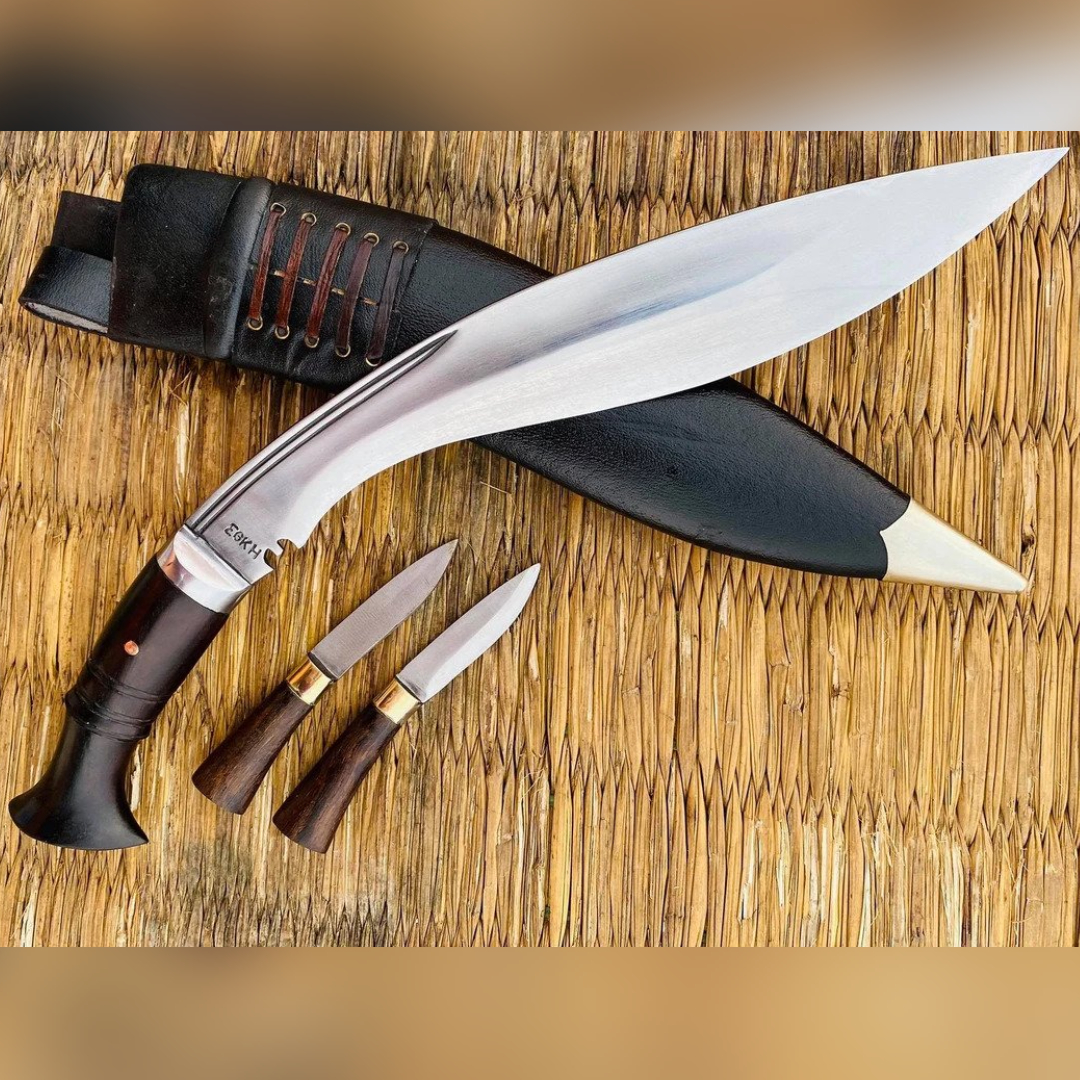
अगाडि झुकेको आकार — यसको विशेष वक्र आकारले काट्ने शक्ति ब्लेडको बीचतिर केन्द्रित गर्छ । यसले center of percussion (घात केन्द्र) अगाडि सार्छ, जसले समान लम्बाइ र तौल भएको सिधा ब्लेडभन्दा बढी काट्ने शक्ति दिन्छ।
-
अगाडि तौल केन्द्र — ब्लेडको तौल टुप्पोतिर बढी हुँदा, सानो मांसपेशीय प्रयासले पनि बढी गति र बल दिन्छ। परिणामस्वरूप, खुकुरीले सानो ब्लेडमा पनि बन्चरो-जस्तो काट्ने शक्ति दिन्छ।
-
वेज-जस्तो संरचना — खुकुरीको बाक्लो स्पाइन र काट्ने कोणले काठ वा रेशा युक्त वस्तुहरू छेड्न र फाटाउन सजिलो बनाउँछ।
-
छोटो तर प्रभावकारी लम्बाइ — बन्चरो वा माछेटीभन्दा सानो हुँदा पनि खुकुरी चलाउन सजिलो र शक्तिशाली हुन्छ।
-
बहुउपयोगिता — साना कामका लागि सानो र ठूला काट्ने कामका लागि ठूलो आकारमा पाइने खुकुरीले काट्ने, चिर्ने, मासु काट्ने, खन्ने आदिमा उत्कृष्ट काम गर्छ।
-
संस्कृतिक परिष्कार — शताब्दीयौँदेखि नेपाली किसान र गोर्खाली सैनिकहरूले प्रयोग गर्दै आएकोले यसको आकार व्यावहारिक रूपमा परिमार्जित भएको छ।
जहाँ खुकुरीले अरूलाई जित्छ
-
काट्ने काममा — समान लम्बाइको सिधा ब्लेडभन्दा खुकुरीले काठ, हड्डी वा बाक्लो झार काट्न धेरै प्रभावकारी रूपमा काम गर्छ।
-
बहुउपयोगीपनमा — यो रसोइका साना चक्कु वा सिधा ट्याक्टिकल ब्लेडभन्दा बढी काममा प्रयोग गर्न सकिन्छ, र बन्चरोभन्दा सजिलो रूपमा नियन्त्रण गर्न सकिन्छ।
-
नजिकको युद्धमा — गोर्खालीहरूले प्रयोग गरेको कारण, यो नजिकको लडाइँका लागि पनि घातक र कुशल हुन्छ।
जहाँ अन्य ब्लेड राम्रो हुन्छन्
-
सूक्ष्म काट्ने वा घोच्ने काममा — लामो र पातलो ब्लेड (जस्तै र्यापियर, फिलेट चक्कु) यी काममा बढी सटीक हुन्छन्।
-
ठूला रूख काट्न — ठूला बन्चरो वा splitting maul अझ प्रभावकारी हुन्छन्।
-
लामो दूरीको पहुँचमा — लामो माछेटी वा तरवारले बढी दूरीमा काट्न सजिलो हुन्छ।
व्यावहारिक कुरा
-
फलाम र बनाउनको गुणस्तर — राम्रो पोलिस र गर्मी नियन्त्रण भएको स्टीलले खुकुरीलाई टिकाउ र धारिलो बनाउँछ।
-
ग्राइन्ड र बेभेल — कन्वेक्स वा फ्ल्याट ग्राइन्ड खुकुरीको काट्ने गुण फरक हुन्छ — धारको कोण र आकारले ठूलो प्रभाव पार्छ।
-
ह्यान्डल र डिजाइन — राम्रो समात्ने ह्यान्डलले लामो प्रयोगमा नियन्त्रण र आराम दिन्छ।
-
रखरखाव — उचित कोणमा धारिलो राख्न र जंगबाट बचाउन जरुरी छ।
सारांश
छोटो, शक्तिशाली र बहुउपयोगी काट्ने उपकरणको रूपमा, खुकुरी विश्वकै सबैभन्दा कुशल डिजाइनमध्ये एक हो। यसको अगाडि झुकेको आकार र तौल वितरणले मानवीय ऊर्जालाई अधिकतम रूपमा प्रयोग गर्न सहयोग गर्छ। सूक्ष्म वा विशेष कामका लागि अन्य ब्लेडहरू उपयुक्त भए पनि, सैनिक, किसान र साहसीहरूको लागि खुकुरीजस्तो सन्तुलित र प्रभावकारी चक्कु विरलै भेटिन्छ।
The khukuri (kukri) is one of the most efficient general-purpose blades ever designed, especially for chopping and mixed utility work. But “most efficient” depends on the task you measure it by — for some tasks other blade shapes outperform it.
Here’s why the khukuri is so efficient, and where it shines or falls short.
Why the khukuri is so effective
-
Forward-curved profile — the distinctive inward curve concentrates force toward the blade’s middle/point. That moves the center of percussion forward, giving each swing more chopping power than a straight blade of the same length and mass.
-
Forward weight bias — much of the mass sits near the tip, so a given muscular effort produces higher blade momentum (mass × velocity). The result is axe-like chopping with a much shorter blade and fewer, faster strokes.
-
Wedge geometry — khukuris typically have a relatively thick spine and a cutting bevel optimized for splitting and chopping; that wedge shape helps bite and keep cutting through fibrous material.
-
Compact length + leverage — shorter than most axes and machetes of equivalent power, the khukuri is nimble in close quarters but still delivers heavy cuts. Great for both camp work and combat.
-
Versatility of form — traditional khukuris come in various sizes from small utility knives to large chopping blades; they can chop, slice, pare, dig, butcher — a true multipurpose tool.
-
Cultural refinement — centuries of use by Nepali farmers and Gurkha soldiers refined the shape for real-world utility; the design is field-tested across climates and tasks.
Where it’s better than other blades
-
Chopping vs long knives: for chopping wood, bone, or thick vegetation, a khukuri with a forward bias outperforms a straight-back knife of the same blade length.
-
Versatility vs specialized tools: it outperforms a narrow-profile kitchen or tactical knife at heavy work, and is more maneuverable than full-size axes for many tasks.
-
Close-quarters combat: historically prized because it combines reach and power in a compact form.
Where other designs beat it
-
Precision slicing & thrusting: long thin blades (rapiers, dress-making knives, fillet knives) are better for reach, fine slicing, thrusting accuracy, or filleting fish. The khukuri’s curve and thick wedge make fine slicing and piercing less efficient.
-
Heavy felling of big trees: a full-size axe or splitting maul is more efficient for felling or splitting very large logs because of greater mass and handle length.
-
Long-distance cutting (reach): longer machetes or swords have more reach and can be more efficient in open-field clearing.
Practical considerations
-
Steel & manufacture matter. Blade steel quality, hardness, and heat-treatment determine cutting retention and toughness. A well-made khukuri is excellent; a cheap one with soft steel can be poor.
-
Grind & bevel: different khukuris (convex, flat, partial flat) will cut differently — the grind is as important as shape.
-
Handle & ergonomics: handle length/shape affects control and comfort under repeated use.
-
Maintenance: keep a proper edge angle (not razor-thin for heavy use) and rust protection; this preserves efficiency.
Summary (short)
For a compact, all-purpose chopping and utility blade, the khukuri is one of the most efficient designs ever developed. Its forward curve and mass distribution make it exceptionally good at turning human swing energy into chopping power while remaining versatile. It’s not the best tool for every single cutting task — there are specialized blades that outperform it at precision work or very large felling — but across the broad set of tasks faced by soldiers, farmers, and outdoors people, the khukuri is unusually efficient.
Want a quick comparison table (khukuri vs machete vs axe vs straight combat knife) or a short physics diagram explaining center of percussion and momentum? I can make one.
खुकरी (Kukri) दुनिया की सबसे कुशल और व्यावहारिक चाकू डिज़ाइनों में से एक है, विशेषकर काटने और बहुउपयोगी कार्यों के लिए। लेकिन “सबसे कुशल” इस बात पर निर्भर करता है कि आप किस काम की बात कर रहे हैं — कुछ कार्यों में अन्य प्रकार की ब्लेडें उससे बेहतर होती हैं।
क्यों खुकरी अत्यंत प्रभावशाली है
-
आगे की ओर झुका हुआ आकार — इसका विशिष्ट अंदर की ओर झुका हुआ ब्लेड काटने की शक्ति को मध्य या नोक की ओर केंद्रित करता है। इससे center of percussion (घात केंद्र) आगे खिसक जाता है, जिससे समान लंबाई और वज़न वाली सीधी ब्लेड की तुलना में ज्यादा ताकत लगती है।
-
सामने की ओर वज़न का झुकाव — खुकरी का वज़न आगे की तरफ अधिक होता है, जिससे कम प्रयास में ज्यादा बल पैदा होता है। परिणामस्वरूप, यह छोटा होते हुए भी बंछी (कुल्हाड़ी) जैसी काटने की ताकत देता है।
-
पच्चर जैसी संरचना — इसकी मोटी रीढ़ (spine) और काटने का कोण लकड़ी या रेशेदार पदार्थों को आसानी से फाड़ने में मदद करता है।
-
संक्षिप्त पर प्रभावशाली लंबाई — कुल्हाड़ी या माछेटी की तुलना में यह छोटी होने के बावजूद शक्तिशाली और आसानी से संभाली जा सकती है।
-
बहुउपयोगिता — खुकरी छोटे घरेलू कामों से लेकर भारी काटने, मांस काटने, खोदने या झाड़ियों की सफाई तक हर काम में उपयोगी है।
-
सांस्कृतिक परिष्कार — सदियों से नेपाली किसानों और गोरखा सैनिकों द्वारा उपयोग के कारण इसका आकार और संतुलन व्यावहारिक अनुभवों से विकसित हुआ है।
जहाँ खुकरी अन्य ब्लेडों से बेहतर है
-
काटने की क्षमता में — समान लंबाई की सीधी ब्लेड की तुलना में यह लकड़ी, हड्डी या मोटी झाड़ियों को बहुत तेजी और आसानी से काटती है।
-
बहुउपयोगिता में — यह रसोई के छोटे चाकू या टैक्टिकल चाकू की तुलना में अधिक उपयोगी है, और बड़ी कुल्हाड़ी की तुलना में नियंत्रित करना आसान।
-
करीबी लड़ाई में — गोरखा सैनिकों द्वारा इसका ऐतिहासिक उपयोग इसकी घातकता और दक्षता का प्रमाण है।
जहाँ अन्य ब्लेडें बेहतर हैं
-
सूक्ष्म या सटीक कटाई और घोंपने में — लंबी और पतली ब्लेडें (जैसे रैपियर, फिलेट चाकू) इन कार्यों में अधिक सटीक होती हैं।
-
बड़े पेड़ काटने में — बड़ी कुल्हाड़ियाँ या स्प्लिटिंग मॉल इस काम के लिए अधिक प्रभावी हैं।
-
लंबी पहुँच के लिए — लंबी माछेटी या तलवारें खुली जगह में बेहतर होती हैं।
व्यावहारिक विचार
-
स्टील और निर्माण गुणवत्ता — अच्छी गुणवत्ता वाले स्टील और उचित हीट-ट्रीटमेंट से बनी खुकरी टिकाऊ और तेज़ रहती है।
-
ग्राइंड और धार का कोण — कन्वेक्स या फ्लैट ग्राइंड के अनुसार खुकरी का प्रदर्शन बदलता है।
-
हैंडल और पकड़ — आरामदायक और संतुलित हैंडल नियंत्रण बढ़ाता है।
-
रखरखाव — सही कोण पर धार बनाए रखना और जंग से बचाना जरूरी है।
सारांश
छोटी, शक्तिशाली और बहुउपयोगी काटने वाली ब्लेड के रूप में खुकरी दुनिया की सबसे कुशल डिज़ाइनों में से एक है। इसका आगे झुका हुआ आकार और वज़न संतुलन मानवीय ऊर्जा का अधिकतम उपयोग करवाता है। यद्यपि सूक्ष्म या विशेष कार्यों के लिए अन्य चाकू अधिक उपयुक्त हो सकते हैं, सैनिकों, किसानों और यात्रियों के लिए खुकरी जैसा संतुलित और प्रभावी औज़ार विरल ही है।


No comments:
Post a Comment