Pages

Saturday, May 24, 2025

China India Relations As They Stand Today


As of May 24, 2025, China-India relations are experiencing a cautious thaw following a period of heightened tensions, particularly since the 2020 Galwan Valley clash. A border patrol agreement announced in October 2024 has led to disengagement in key friction points like Depsang and Demchok, with troops withdrawn and weekly coordinated patrols established. This progress was solidified by high-level meetings, including a Xi-Modi summit at the BRICS Summit in Kazan, Russia, in October 2024, and subsequent dialogues between foreign and defense ministers, culminating in a six-point consensus emphasizing border stability and cooperation.
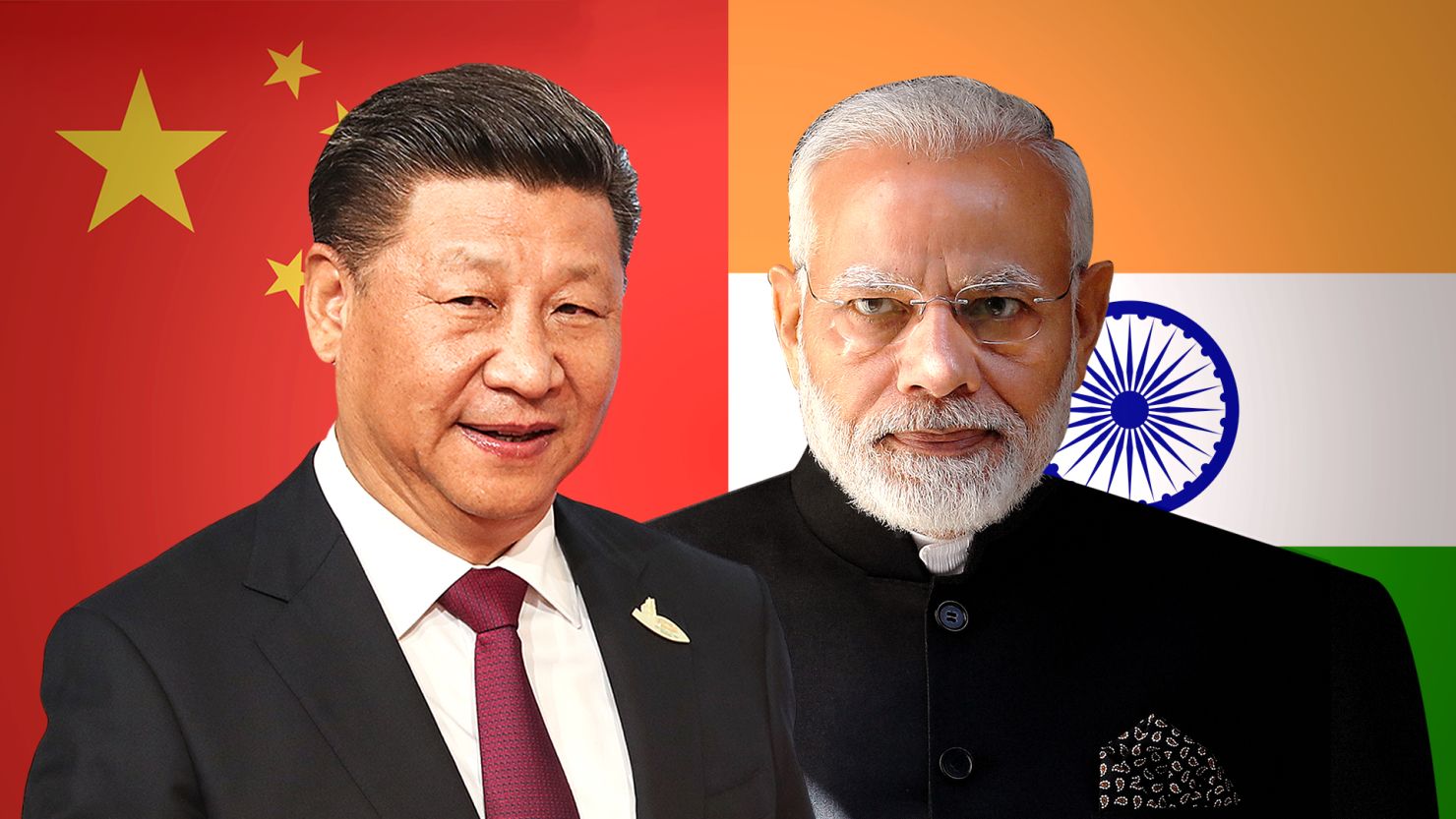
Despite these steps, relations remain complex and fraught with challenges. The border dispute along the Line of Actual Control (LAC) persists, with de-escalation and troop reduction still incomplete. Both nations maintain significant military deployments and are enhancing infrastructure near the border, signaling a "hope for the best, prepare for the worst" approach. Deep-seated mistrust, rooted in historical conflicts like the 1962 Sino-Indian War and recent events, continues to shape interactions. India’s strategic autonomy and its growing ties with the U.S., particularly through the Quad, are viewed warily by China, which seeks to counterbalance this alignment.
Economically, China remains India’s largest trading partner, but the relationship is asymmetrical, with India facing a significant trade deficit. Cultural and diplomatic exchanges, such as the resumption of the Kailash Mansarovar Yatra and direct flights in 2025, signal efforts to normalize ties, but issues like China’s claims over Arunachal Pradesh and its blocking of India’s bids for UNSC permanent membership and NSG entry keep tensions alive. Recent India-Pakistan clashes over Kashmir have also strained the thaw, as China condemned terrorism but urged restraint, highlighting its strategic ties with Pakistan.
The Tibet issue, particularly the Dalai Lama’s succession, looms as a potential flashpoint, with his planned announcement in July 2025 likely to test bilateral relations. Overall, while 2025 shows signs of cautious progress, with both sides seeking stability amid global uncertainties, competing geopolitical interests and unresolved disputes suggest that relations will remain turbulent, balancing cooperation with underlying rivalry.


Rethinking Trade: A Blueprint for a Just and Thriving Global Economy
The $500 Billion Pivot: How the India-US Alliance Can Reshape Global Trade
Trump’s Trade War
Peace For Taiwan Is Possible
Formula For Peace In Ukraine
The Last Age of War, The First Age of Peace: Lord Kalki, Prophecies, and the Path to Global Redemption
AOC 2028: : The Future of American Progressivism

Rethinking Trade: A Blueprint for a Just and Thriving Global Economy
The $500 Billion Pivot: How the India-US Alliance Can Reshape Global Trade
Trump’s Trade War
Peace For Taiwan Is Possible
Formula For Peace In Ukraine
The Last Age of War, The First Age of Peace: Lord Kalki, Prophecies, and the Path to Global Redemption
AOC 2028: : The Future of American Progressivism

Rethinking Trade: A Blueprint for a Just and Thriving Global Economy
The $500 Billion Pivot: How the India-US Alliance Can Reshape Global Trade
Trump’s Trade War
Peace For Taiwan Is Possible
Formula For Peace In Ukraine
The Last Age of War, The First Age of Peace: Lord Kalki, Prophecies, and the Path to Global Redemption
AOC 2028: : The Future of American Progressivism

Rethinking Trade: A Blueprint for a Just and Thriving Global Economy
The $500 Billion Pivot: How the India-US Alliance Can Reshape Global Trade
Trump’s Trade War
Peace For Taiwan Is Possible
Formula For Peace In Ukraine
The Last Age of War, The First Age of Peace: Lord Kalki, Prophecies, and the Path to Global Redemption
AOC 2028: : The Future of American Progressivism

This Time Is Different: Why AI Isn’t Just the Next Tech Wave—It’s the End of Capitalism As We Know It


This Time Is Different: Why AI Isn’t Just the Next Tech Wave—It’s the End of Capitalism As We Know It

Every major technological leap—from the steam engine to the internet—has followed a familiar pattern. Old jobs are displaced, new ones are created, and a new economic order slowly emerges. The industrial revolution gave rise to factories. Electricity gave rise to mass consumer goods. The digital revolution created the software industry and the gig economy. And with each wave, society adapted. Capitalism bent, but it didn’t break.

Until now.

AI, robotics, and automation mark a break in that historical trend. For the first time in modern history, we face a technological force that is not simply reshuffling the economic deck but removing the need for human labor altogether in vast sectors of the economy. From customer service to transportation, from manufacturing to law and even coding—machines can now think, learn, and act faster, cheaper, and without fatigue.

This is not just a wave. It’s a tidal shift. And it breaks the fundamental engine of capitalism: labor for wages.

Capitalism’s Core Logic Is Failing

Capitalism is built on a simple premise: people sell their time and skills in exchange for money, which they then use to buy goods and services. But what happens when your time and skills are no longer needed? When an AI can do your job 24/7 for a fraction of the cost? When a factory runs in the dark with no workers, no lights, no shifts?

The old answer was: "Don’t worry—new industries will rise." And they will. But not at the same scale. Not fast enough. And not for everyone.

AI doesn't need armies of factory workers. It needs a handful of data scientists, some engineers, and endless electricity. The idea that we’ll all become prompt engineers or robot therapists is a fantasy for the few. For the many, the ladder of opportunity is collapsing faster than it can be rebuilt.

Enter Kalkiism: The Economic Paradigm Shift

The answer isn’t to panic—it’s to evolve. And that evolution already has a name: Kalkiism, also known as Karmaism. It’s not just an economic theory. It’s a blueprint for a post-capitalist world where human dignity is not tied to a paycheck, where automation liberates rather than enslaves, and where technology serves the collective good, not just corporate profits.

Kalkiism rejects the idea that value must be extracted from labor. Instead, it centers on Gross Domestic Requirement (GDR)—a framework that ensures every person receives what they need to live, learn, and contribute, regardless of their employment status. It proposes a universal time-based economy rooted in service, community, and karma—not cash.

Nepal: The Pilot Light of a New World

This isn’t utopia on paper. It’s reality in motion. A pilot project is launching in Nepal, a country often overlooked by global economic discourse but now positioned to lead the most radical transformation of the 21st century. In select communities, the principles of Kalkiism are being put into action: needs-based distribution, digital participation, local sovereignty, and a restructuring of value away from profit toward purpose.

Nepal may be small, but like Estonia was for e-governance or Bhutan for Gross National Happiness, it could become the global testbed for post-capitalist economics.

A Call to Wake Up

The fear around AI-driven job losses is real—but it is also a signal. Not to double down on obsolete systems. Not to scramble for outdated jobs. But to rethink the entire architecture of our economy.

This time is different. And that's a good thing—because this time, we have a chance not just to adapt, but to transcend.

The age of AI is not the end of opportunity. It is the beginning of a new form of civilization.

It’s time to leave behind the scarcity-based thinking of capitalism—and step into the abundance-driven ethos of Kalkiism.

The future is already here. And it begins in Nepal.